Carolina Wren · Reclaimed Wood
The Potting Shed
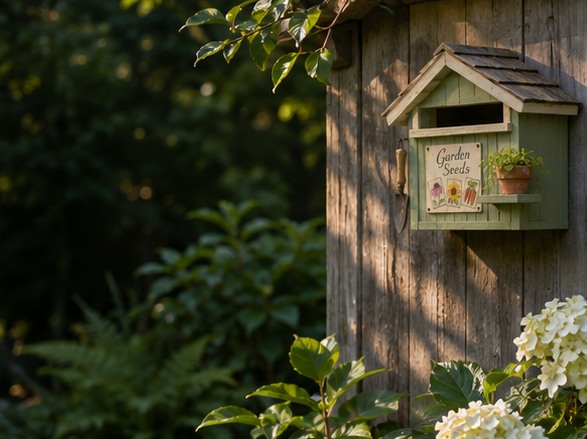
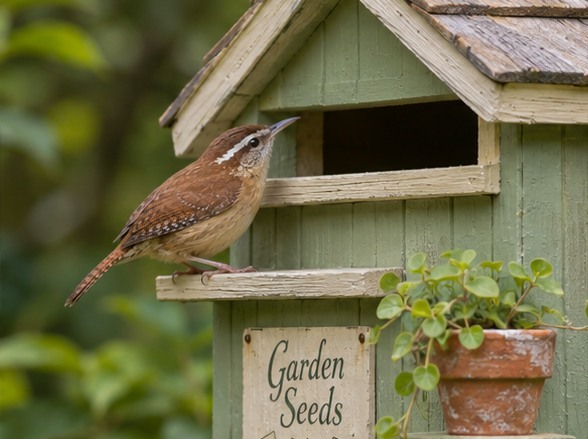
A faded seed packet hangs above the opening of a sage-green potting shed.
The Birdhouse
Seed Packets Under the Eave
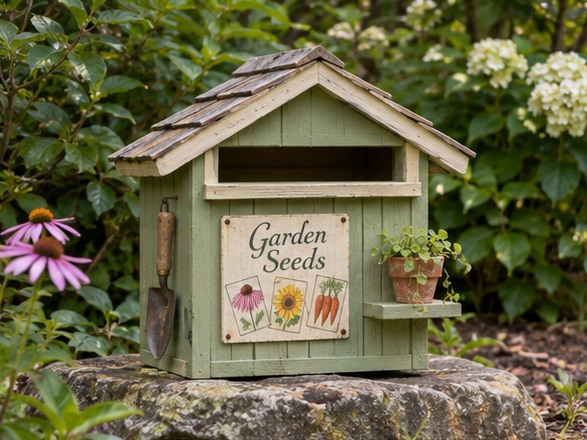
A faded seed packet hangs above the opening of a sage-green potting shed. On a full-size shed you might find a wren tucked behind the tools. Here the front is deliberately sheltered, with space under the roof for a bird to slip inside.
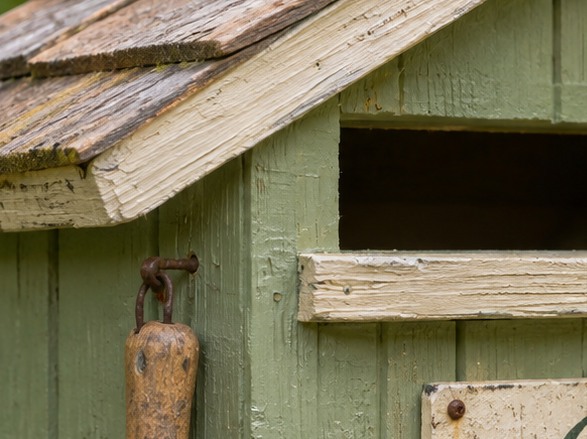
Imagine seeing it first from a kitchen window, then from a few steps away. At the window it is the outline you notice. Up close, the painted detail catches the eye and the grain shows why the same pattern can look a little different on each piece of reclaimed wood. Both views are part of the character of a handmade house. Underneath that familiar outline, the form is a partly enclosed nesting nook intended for the Carolina Wren.
The Intended Bird
Meet the Carolina Wren
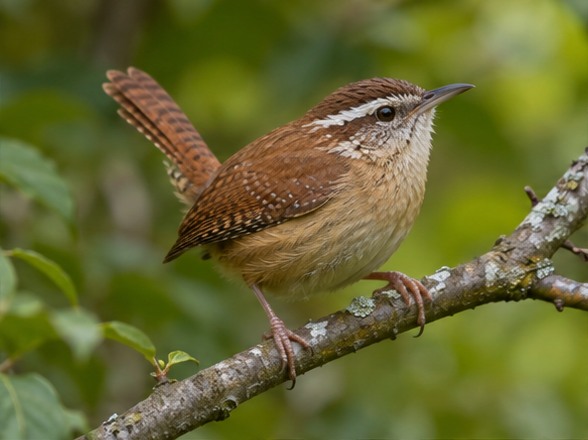
A white eyebrow stands out against a warm rusty back. The short tail often points upward as the bird works its way through leaf litter. Wrens often choose a partly enclosed nook on a building. A roofed opening offers that familiar shape close to protected cover.
The overhang and side walls leave a sheltered pocket that a wren can approach from cover. Look at the path from the nearest shrubs before choosing a wall. Adults make many visits carrying leaves and grass, and a quiet approach is useful when they return with food later in the season. A comparison with the species plan will help you confirm the finished dimensions and entrance details before installation.
The Landscape
Range and Nesting Habitat
Where might you see the Carolina Wren? Across much of eastern North America, from suburban gardens to brushy woodland edges. Look for a sheltered building near dense shrubs. A busy doorway may have cover but offers little quiet for adults coming and going.
The useful question is where this bird spends its nesting season. A dot on a year-round sightings map could represent a migrant stopping for a day. Compare the breeding range with summer observations from a nearby park or natural area. Then walk your own grounds and look for the same pattern of food, cover and open approach before selecting the final spot.
The Handmade Detail
Whose Garden Is This?
Choose a gardener’s name or the seed variety you remember finding in their apron pocket. A single illustrated flower and a few large letters can fit on a seed packet that will be seen from across the yard.
When discussing The Potting Shed with the workshop, describe the part of the design that first caught your eye. A quick sketch or a reference photograph can say more than a long list of changes. Think about how the piece will look in summer leaves as well as against bare branches. The grain of reclaimed wood varies from board to board, so a painted line can pick up a different texture on the finished house. Keep the entrance, the roof edge and access for seasonal care clear of any requested embellishment.
Field Notes
Watching the House Through the Season
Listen for a surprisingly loud repeated song, then watch the shrubs for a small bird disappearing into a gap.
Choose a seat from which you can see the entrance without standing in front of it. A few quiet minutes in the morning and another look toward evening can reveal different parts of the bird’s routine. If an adult waits with food or calls repeatedly while you are nearby, move farther away and let it resume its visits. For The Potting Shed, plan for an unobstructed view from a comfortable distance and leave the entrance quiet whenever birds are using it. Use the linked NestWatch guide to plan checks appropriate to the Carolina Wren.