Carolina Chickadee · Reclaimed Wood
The Box Camera
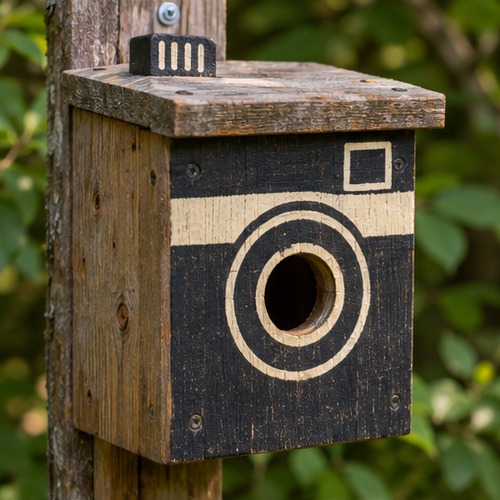
The entrance itself forms the lens.
The Birdhouse
Through the Viewfinder
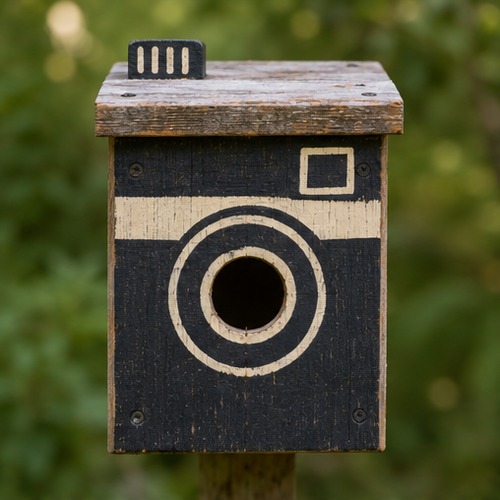
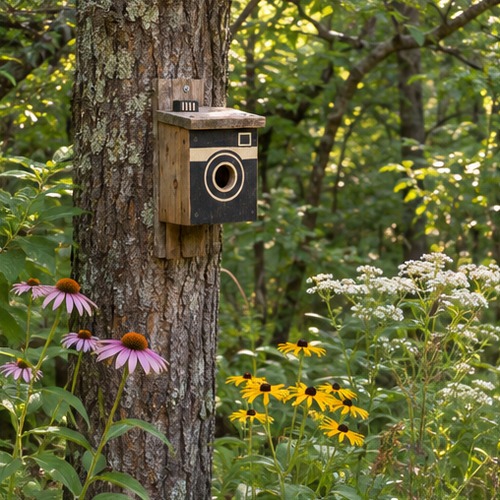
The entrance itself forms the lens. Two painted rings surround it; a square viewfinder and cream stripe finish the old box camera. The trick is that the most recognizable part of the picture is also the one opening the chickadee actually needs.
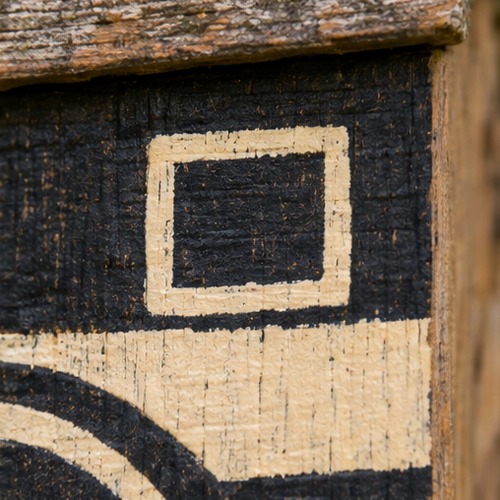
Imagine seeing it first from a kitchen window, then from a few steps away. At the window it is the outline you notice. Up close, the painted detail catches the eye and the grain shows why the same pattern can look a little different on each piece of reclaimed wood. Both views are part of the character of a handmade house. Underneath that familiar outline, the form is a cavity nest box intended for the Carolina Chickadee.
The Intended Bird
Meet the Carolina Chickadee
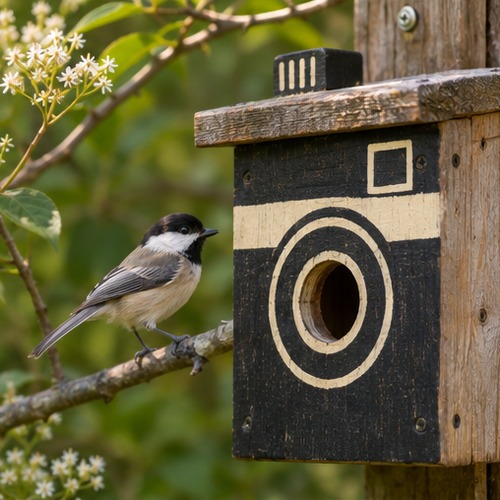
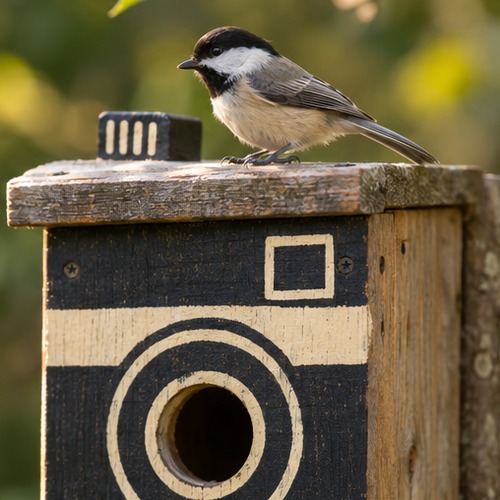
Look for a small black-capped bird with white cheeks and a dark bib inspecting the ends of leafy twigs. Its quick movements and voice are often easier to pick up than subtle plumage differences. A compact cavity suits a small woodland bird that carries moss and soft lining into the nest. An unobstructed entrance matters more to the bird than the lettering or artwork outside.
An adult needs to enter with nest material, turn inside and leave again with a clear flight path. That sequence explains the simple face of this design. The paint gives people something to recognize from a distance while the actual chamber gives the bird a sheltered space. When choosing a site, picture the journey from a nearby perch all the way to the opening, including the last few feet.
The Landscape
Range and Nesting Habitat
Where might you see the Carolina Chickadee? Primarily the southeastern United States, extending west into parts of Texas and north to a shifting contact zone with the Black-capped Chickadee. Favor a yard with mature deciduous trees or a woodland edge. An exposed fence in the middle of an open lawn offers little of the leafy foraging space chickadees use.
The useful question is where this bird spends its nesting season. A dot on a year-round sightings map could represent a migrant stopping for a day. Compare the breeding range with summer observations from a nearby park or natural area. Then walk your own grounds and look for the same pattern of food, cover and open approach before selecting the final spot.
The Handmade Detail
What camera first made you look closer?
Think about the direction of light where you will view the camera. Side light reveals the grain under the painted rings, while an uncluttered background makes the viewfinder shape easier to pick out.
When discussing The Box Camera with the workshop, describe the part of the design that first caught your eye. A quick sketch or a reference photograph can say more than a long list of changes. Think about how the piece will look in summer leaves as well as against bare branches. The grain of reclaimed wood varies from board to board, so a painted line can pick up a different texture on the finished house. Keep the entrance, the roof edge and access for seasonal care clear of any requested embellishment.
Field Notes
Watching the House Through the Season
Listen for chickadee calls and watch a flock work from tree to tree. In areas where both chickadees meet, use range, voice and local records together before naming a distant visitor.
Keep a pair of binoculars at the window you use most often. Look first at the approach, then at the house, and finally at the surrounding trees or open ground. This wider view makes it easier to understand where the birds feed and which routes they prefer. It also gives a visitor a chance to inspect the house without a person waiting at the entrance. For The Box Camera, plan for an unobstructed view from a comfortable distance and leave the entrance quiet whenever birds are using it. Use the linked NestWatch guide to plan checks appropriate to the Carolina Chickadee.