American Robin · Reclaimed Wood
The Home Dugout
A dugout is already open at the front.
The Birdhouse
The Home Team
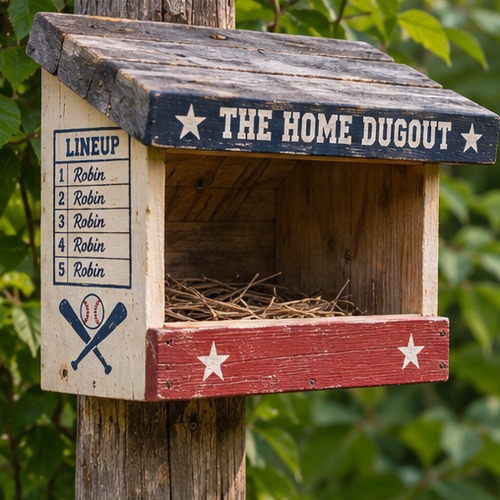
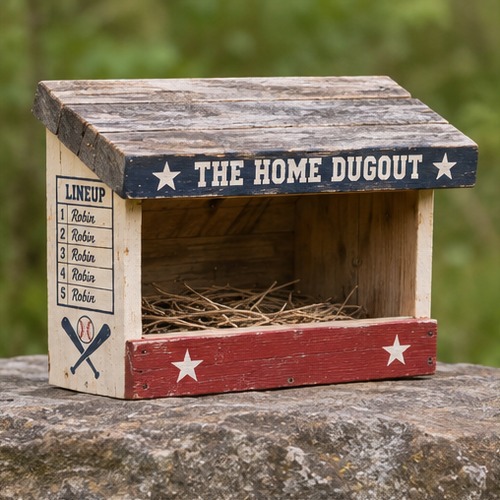
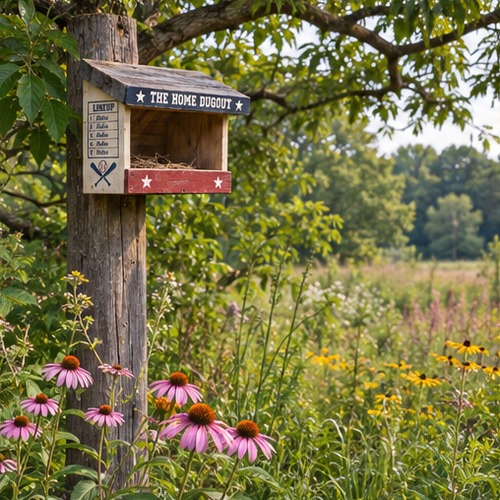
A dugout is already open at the front. That makes it a natural starting point for a robin shelf, with the family name across the roof edge and a painted lineup card on the outside wall. The roof and ledge do double duty as architecture and nesting support.
Imagine seeing it first from a kitchen window, then from a few steps away. At the window it is the outline you notice. Up close, the painted detail catches the eye and the grain shows why the same pattern can look a little different on each piece of reclaimed wood. Both views are part of the character of a handmade house. Underneath that familiar outline, the form is a covered nesting shelf intended for the American Robin.
The Intended Bird
Meet the American Robin
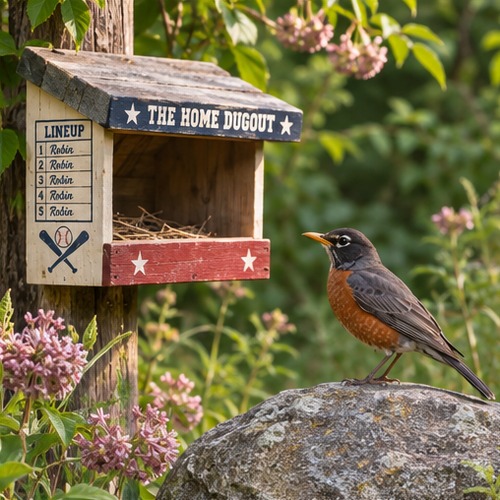
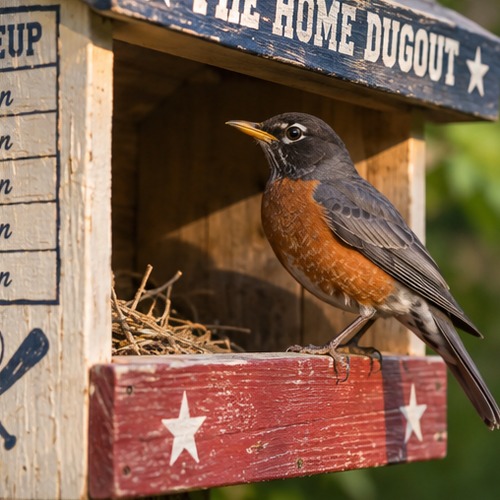
Look for an orange breast, upright posture and the familiar sequence of running a short distance, pausing and tilting the head on a lawn. In colder months robins also gather around fruit. An open platform with overhead shelter supports the robin’s substantial cup nest. The robin brings grass and mud and shapes the cup itself; a little round entrance would defeat the purpose.
Look at the front of the house and imagine an adult arriving with its bill full. The broad opening lets it fly directly to the nesting surface, turn and leave without squeezing past a door. The sides give the ledge definition while the overhead cover protects the place where the bird attaches its own nest. The nest material comes later, carried in by the birds themselves.
The Landscape
Range and Nesting Habitat
Where might you see the American Robin? Across much of North America, from northern breeding areas to year-round populations farther south. Local robins may change their feeding habits and movements with the season. Choose a quiet covered spot on a stable structure with open access to the shelf. Think about foot traffic below and whether the birds could raise young without frequent close approaches.
The useful question is where this bird spends its nesting season. A dot on a year-round sightings map could represent a migrant stopping for a day. Compare the breeding range with summer observations from a nearby park or natural area. Then walk your own grounds and look for the same pattern of food, cover and open approach before selecting the final spot.

The Handmade Detail
Which family name belongs over the dugout?
A family surname, team nickname or familiar ballpark reference can carry the dedication. Choose lettering that can be read from outside the approach to the shelf, especially if it is near a porch.
When discussing The Home Dugout with the workshop, describe the part of the design that first caught your eye. A quick sketch or a reference photograph can say more than a long list of changes. Think about how the piece will look in summer leaves as well as against bare branches. The grain of reclaimed wood varies from board to board, so a painted line can pick up a different texture on the finished house. Keep the entrance, the roof edge and access for seasonal care clear of any requested embellishment.
Field Notes
Watching the House Through the Season
A bird carrying a beakful of wet grass often pauses before heading to the nest. Give it space to complete the trip rather than following; watch the approach from a window or distant chair.
Keep a pair of binoculars at the window you use most often. Look first at the approach, then at the house, and finally at the surrounding trees or open ground. This wider view makes it easier to understand where the birds feed and which routes they prefer. It also gives a visitor a chance to inspect the house without a person waiting at the entrance. For The Home Dugout, plan for an unobstructed view from a comfortable distance and leave the entrance quiet whenever birds are using it. Use the linked NestWatch guide to plan checks appropriate to the American Robin.