Brown-headed Nuthatch · Reclaimed Wood
The Piney Woods Sawmill
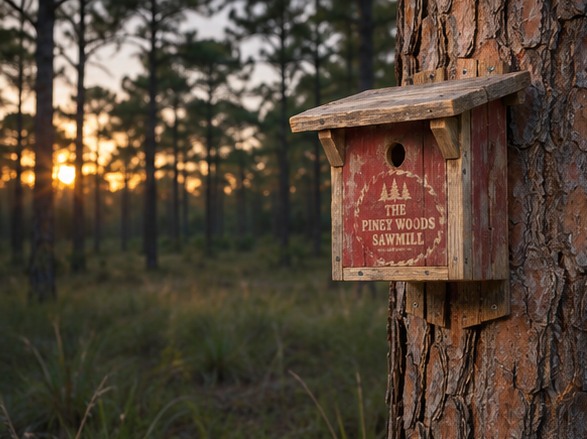
Rough pine boards and a low roof recall the little scale house at a sawmill.
The Birdhouse
A Mill Among the Longleaf Pines
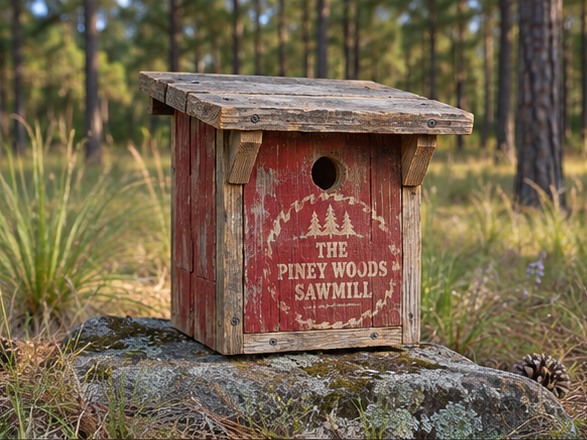
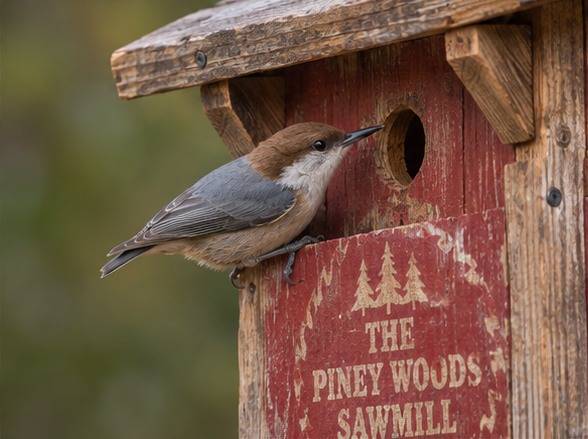
Rough pine boards and a low roof recall the little scale house at a sawmill. A faded lumber stamp sits off to one side. The stamp carries the mill’s identity while the tiny round entrance sets the scale for the nuthatch this house is meant to serve.
Imagine seeing it first from a kitchen window, then from a few steps away. At the window it is the outline you notice. Up close, the painted detail catches the eye and the grain shows why the same pattern can look a little different on each piece of reclaimed wood. Both views are part of the character of a handmade house. Underneath that familiar outline, the form is a cavity nest box intended for the Brown-headed Nuthatch.
The Intended Bird
Meet the Brown-headed Nuthatch
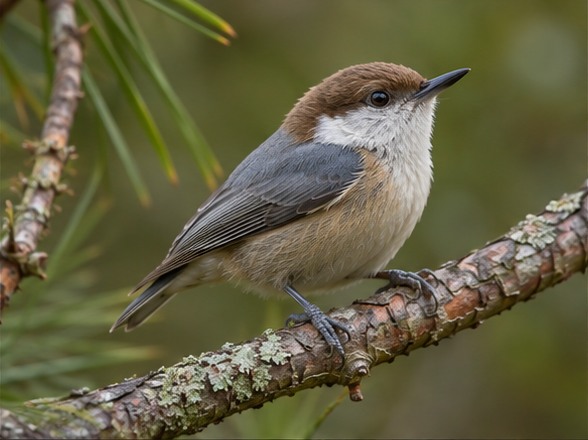
The brown crown meets a pale cheek and blue-gray back. The compact bird climbs along trunks and branches, sometimes hanging beneath them. A small cavity with a one-inch entrance suits this nuthatch. Open stands of pine are an important part of the match between the house and the bird.
An adult needs to enter with nest material, turn inside and leave again with a clear flight path. That sequence explains the simple face of this design. The paint gives people something to recognize from a distance while the actual chamber gives the bird a sheltered space. When choosing a site, picture the journey from a nearby perch all the way to the opening, including the last few feet.
The Landscape
Range and Nesting Habitat
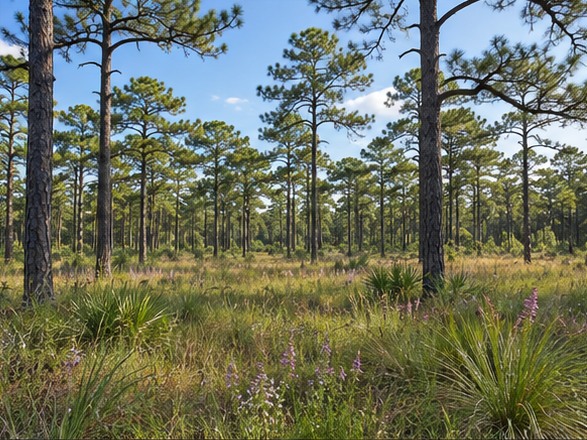
Where might you see the Brown-headed Nuthatch? Primarily in the pine forests of the southeastern United States, including parts of East Texas. Look for mature pines with some open space between trunks. A yard with a single ornamental pine may be far from the nearest breeding population.
The useful question is where this bird spends its nesting season. A dot on a year-round sightings map could represent a migrant stopping for a day. Compare the breeding range with summer observations from a nearby park or natural area. Then walk your own grounds and look for the same pattern of food, cover and open approach before selecting the final spot.
The Handmade Detail
Which Mill Stamp Belongs Here?
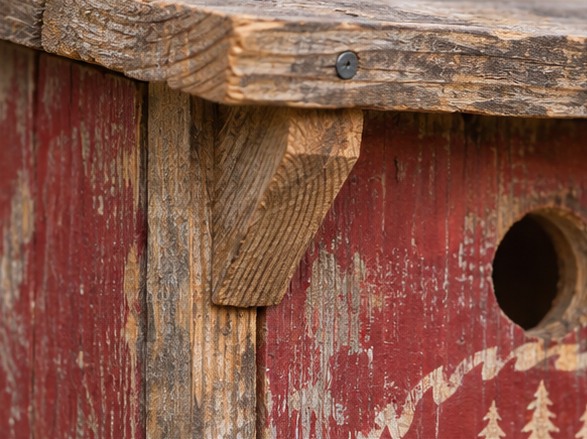
A family surname, county abbreviation or set of initials can become the mill stamp. Choose one mark and give it enough space to read against the grain. The effect should resemble the imprint on the end of a board.
When discussing The Piney Woods Sawmill with the workshop, describe the part of the design that first caught your eye. A quick sketch or a reference photograph can say more than a long list of changes. Think about how the piece will look in summer leaves as well as against bare branches. The grain of reclaimed wood varies from board to board, so a painted line can pick up a different texture on the finished house. Keep the entrance, the roof edge and access for seasonal care clear of any requested embellishment.
Field Notes
Watching the House Through the Season
Listen for a high squeak among the pine crowns. Follow the sound down a branch before checking whether the bird visits the box.
A notebook can be as useful as a camera. Sketch the route from a favorite perch, record whether one bird or two appeared, and note the first day you saw nesting material. These details are easy to miss when trying to fill the frame. Compare the notes later with the nesting calendar for your own area. For The Piney Woods Sawmill, plan for an unobstructed view from a comfortable distance and leave the entrance quiet whenever birds are using it. Use the linked NestWatch guide to plan checks appropriate to the Brown-headed Nuthatch.