Eastern Bluebird · Reclaimed Wood
The Nineteenth Hole
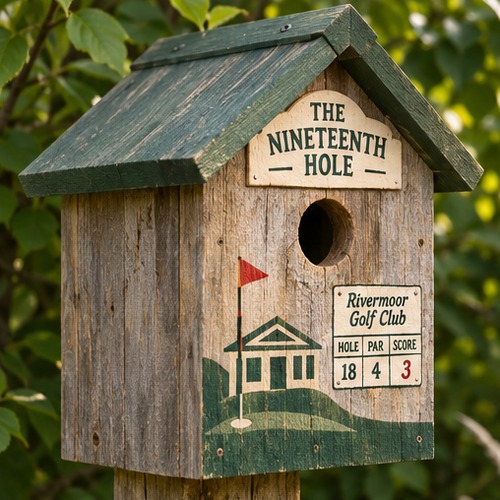
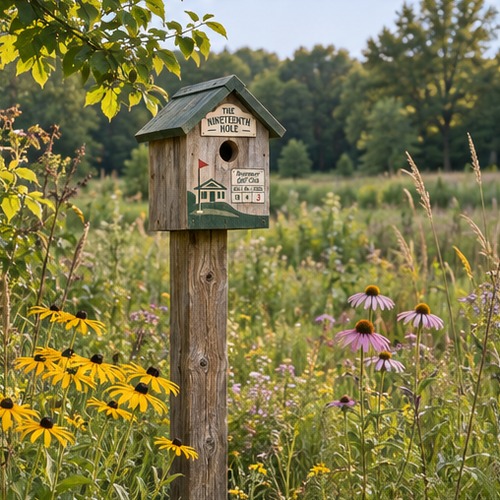
The little clubhouse takes its identity from a painted scorecard.
The Birdhouse
One Last Hole
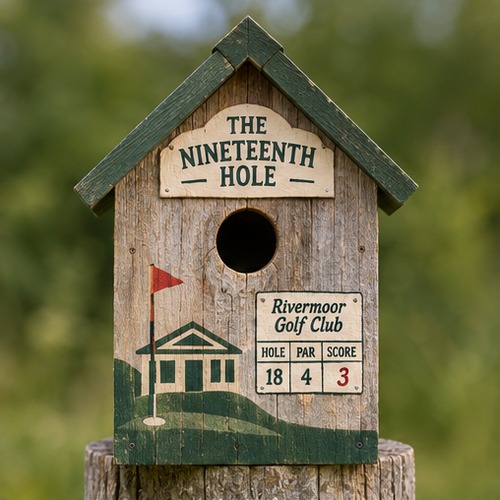
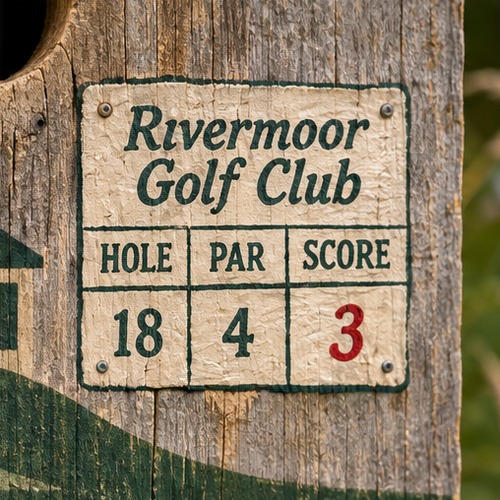
The little clubhouse takes its identity from a painted scorecard. A course name and a final-hole score are enough to recall a rainy tournament, a first birdie or a regular Sunday foursome. There is room for a private golf story without a yard full of miniature clubs.
A good test for a themed birdhouse is whether you can describe it to a friend after a glance from across the yard. This one has a clear visual cue, with the finer details left for a closer look. The face of each reclaimed board varies, giving the painted surface a little of the character of the wood beneath it. Underneath that familiar outline, the form is a cavity nest box intended for the Eastern Bluebird.
The Intended Bird
Meet the Eastern Bluebird
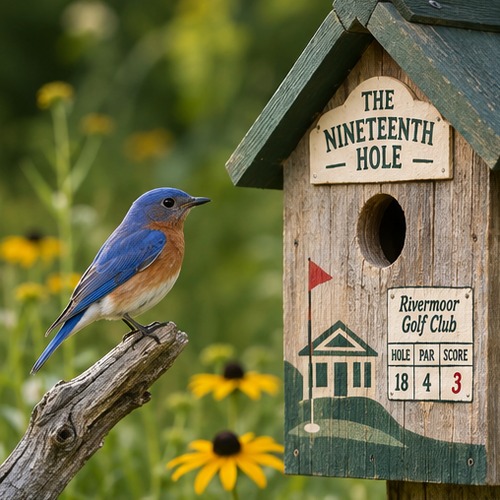
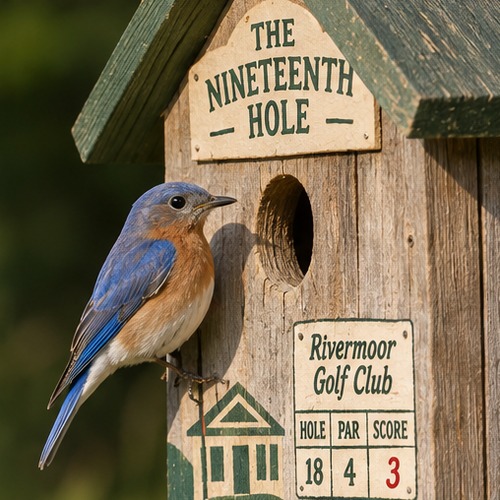
Look for blue wings above a warm rusty breast. A hunting bird often pauses on a low perch and drops straight to the ground after an insect, then returns to survey the same patch. An enclosed cavity sits beside the open ground where the pair can hunt. Bluebirds carry dry grasses into a suitable nest site and shape them into a fairly neat cup.
An adult needs to enter with nest material, turn inside and leave again with a clear flight path. That sequence explains the simple face of this design. The paint gives people something to recognize from a distance while the actual chamber gives the bird a sheltered space. When choosing a site, picture the journey from a nearby perch all the way to the opening, including the last few feet.
The Landscape
Range and Nesting Habitat
Where might you see the Eastern Bluebird? From eastern and central North America south into parts of Mexico and Central America. Many remain through winter in the southern part of the range. Look for short vegetation with scattered perches, such as an orchard edge or a lightly managed meadow. Face the opening toward a clear flight path, well away from roads and heavily treated turf.
Read the range map at two scales. First check whether your part of the country supports breeding birds. Then look at the few hundred yards around the proposed location. Local vegetation, water, elevation and neighboring land can change the answer even within one ZIP code. The linked species account is a starting point for comparing your yard with places where the bird actually nests.
The Handmade Detail
Which course and finishing score belong here?
Pick a course nickname if the official title is long. Ask the golfer for the actual score on the last hole; a six can make a more memorable gift than an invented eagle.
For a gift, a short note explaining why you chose The Nineteenth Hole can be as meaningful as the house itself. Include the place, person or small memory that makes the design familiar. If you have a particular painted detail in mind, share it with the maker before ordering and ask how it will read at the finished size. Reclaimed boards have individual markings; the illustration shows the design direction, while the real piece will carry the grain of the timber selected for it.
Field Notes
Watching the House Through the Season
Use binoculars to follow the same perch for several minutes. A pair gathering grass or carrying food repeatedly in one direction is a better clue to nesting than the flash of a blue wing.
Try making a small field note after each visit. Write down the time, the weather and what the visitor actually did. A bird resting on the roof, a bird entering once and a pair making repeated trips with food are three different observations. After a few weeks those modest notes often tell a better story than one dramatic photograph. For The Nineteenth Hole, plan for an unobstructed view from a comfortable distance and leave the entrance quiet whenever birds are using it. Use the linked NestWatch guide to plan checks appropriate to the Eastern Bluebird.