Eastern Bluebird · Reclaimed Wood
The Dance Hall
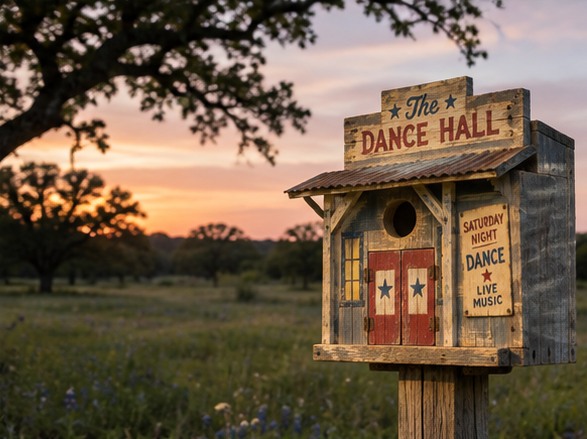
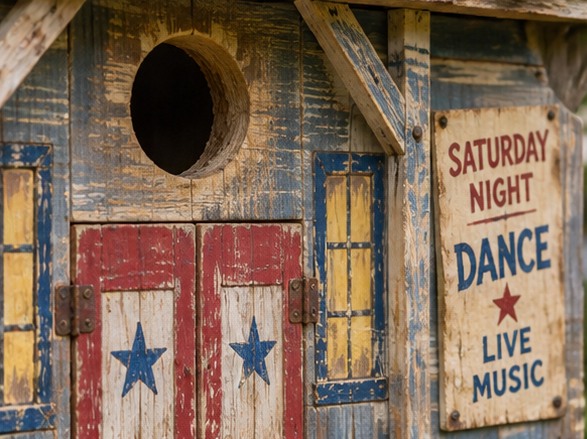
Painted double doors stand beneath a round bluebird entrance on this Texas dance hall.
The Birdhouse
Doors Open Saturday Night
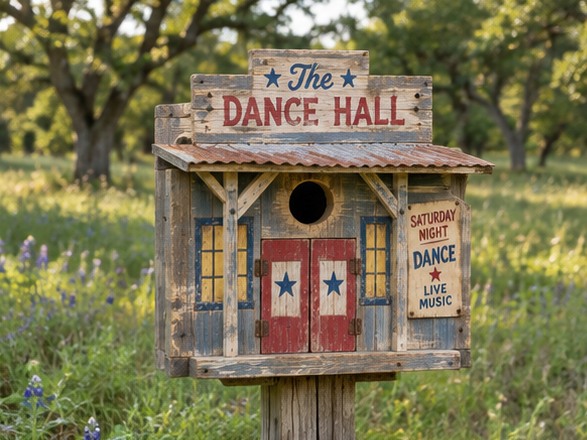
Painted double doors stand beneath a round bluebird entrance on this Texas dance hall. A Saturday-night showbill hangs beside the doors. The long stretch of weathered siding gives that little square of paper the same prominence it might have on the wall of a real hall.
Stand back until the smaller lettering disappears. The outline and the broad blocks of color still tell you what you are looking at. Move closer and the brushwork and grain become visible. Reclaimed boards bring their own small variations in tone, so two versions of the same design can have a different surface under the paint. Underneath that familiar outline, the form is a cavity nest box intended for the Eastern Bluebird.
The Intended Bird
Meet the Eastern Bluebird
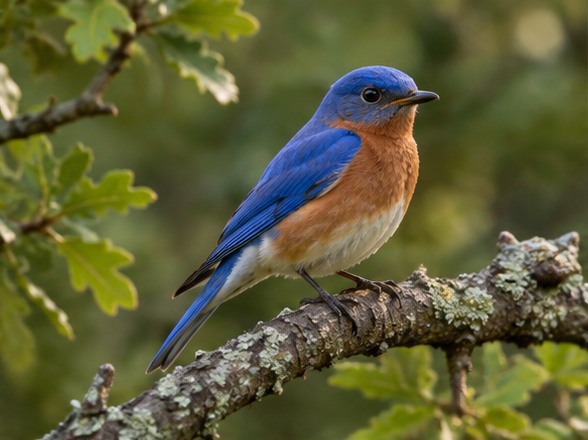
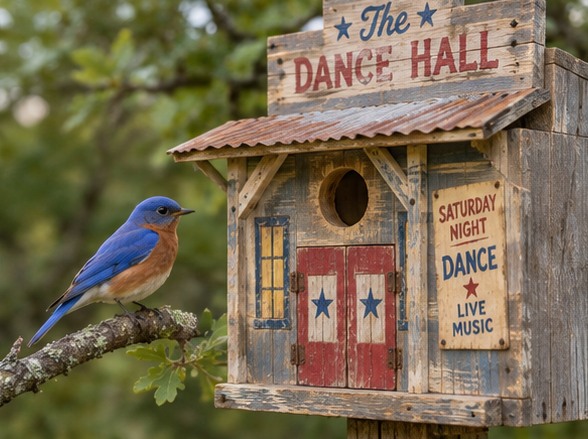
Look for blue wings above a warm rusty breast. A hunting bird often pauses on a low perch and drops straight to the ground after an insect, then returns to survey the same patch. An enclosed cavity sits beside the open ground where the pair can hunt. Bluebirds carry dry grasses into a suitable nest site and shape them into a fairly neat cup.
An adult needs to enter with nest material, turn inside and leave again with a clear flight path. That sequence explains the simple face of this design. The paint gives people something to recognize from a distance while the actual chamber gives the bird a sheltered space. When choosing a site, picture the journey from a nearby perch all the way to the opening, including the last few feet.
The Landscape
Range and Nesting Habitat
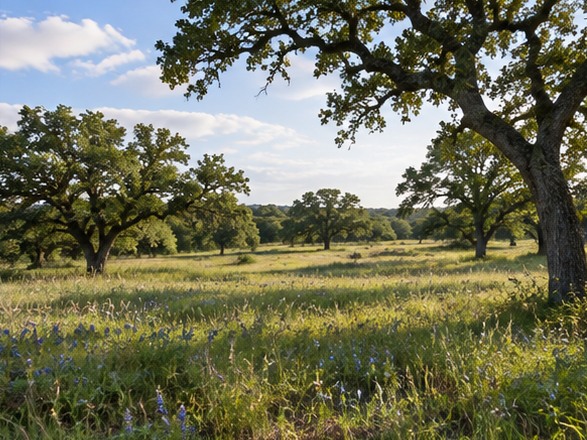
Where might you see the Eastern Bluebird? From eastern and central North America south into parts of Mexico and Central America. Many remain through winter in the southern part of the range. Look for short vegetation with scattered perches, such as an orchard edge or a lightly managed meadow. Face the opening toward a clear flight path, well away from roads and heavily treated turf.
Check a breeding-season map before choosing a mounting point. A bird seen on a winter walk or during migration may spend the nesting months hundreds of miles away. Look at recent local observations from late spring or summer and compare the habitat around those sightings with your own property. The match becomes more convincing when both the season and the landscape line up.
The Handmade Detail
Who Is on the Dance Bill?
Pick a band name, a wedding date or the hour the first set began. A place and a date can say plenty on a small showbill. Decide which line matters most so the maker can paint it large enough to read.
Before settling on the final look of The Dance Hall, try writing the most important detail on a piece of paper at roughly the size you expect to see. Step back to the distance of your garden chair. Notice what you can still read and which colors disappear against the background. A photograph of the proposed spot helps when discussing the piece with the maker. Allow for differences in the reclaimed boards, especially where a dark grain line crosses a light painted area.
Field Notes
Watching the House Through the Season
Use binoculars to follow the same perch for several minutes. A pair gathering grass or carrying food repeatedly in one direction is a better clue to nesting than the flash of a blue wing.
Choose a seat from which you can see the entrance without standing in front of it. A few quiet minutes in the morning and another look toward evening can reveal different parts of the bird’s routine. If an adult waits with food or calls repeatedly while you are nearby, move farther away and let it resume its visits. For The Dance Hall, plan for an unobstructed view from a comfortable distance and leave the entrance quiet whenever birds are using it. Use the linked NestWatch guide to plan checks appropriate to the Eastern Bluebird.