Hooded Merganser · Reclaimed Wood
The Cypress Canoe Livery
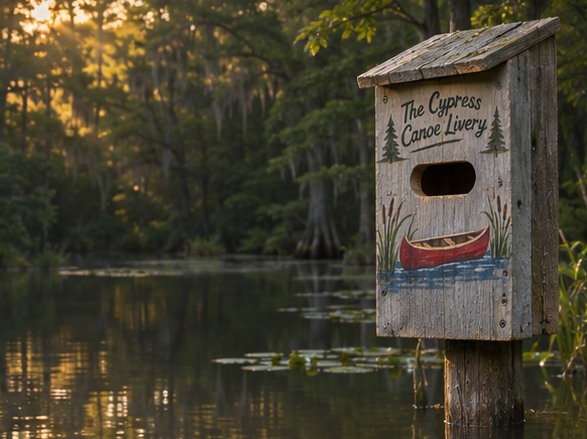
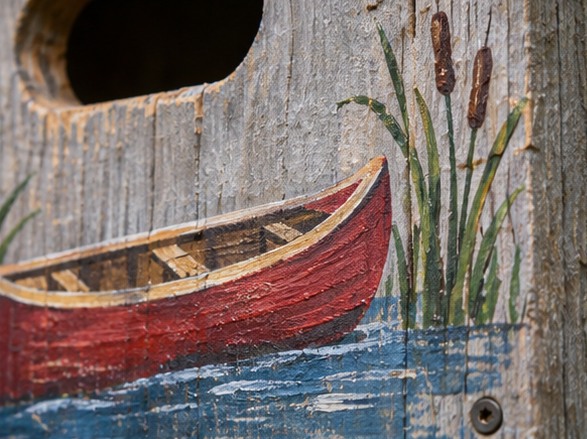
A brick-red canoe is painted along the gray boards of a waterside livery.
The Birdhouse
Canoes for Hire
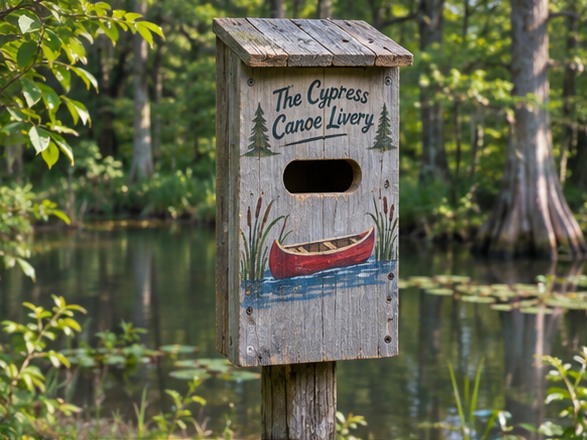
A brick-red canoe is painted along the gray boards of a waterside livery. The blue line below it suggests yesterday’s high water. Up above, the broad horizontal opening belongs to a duck box, giving the familiar waterfront building an unexpectedly tall shape.
A good test for a themed birdhouse is whether you can describe it to a friend after a glance from across the yard. This one has a clear visual cue, with the finer details left for a closer look. The face of each reclaimed board varies, giving the painted surface a little of the character of the wood beneath it. Underneath that familiar outline, the form is a deep nest box intended for the Hooded Merganser.
The Intended Bird
Meet the Hooded Merganser
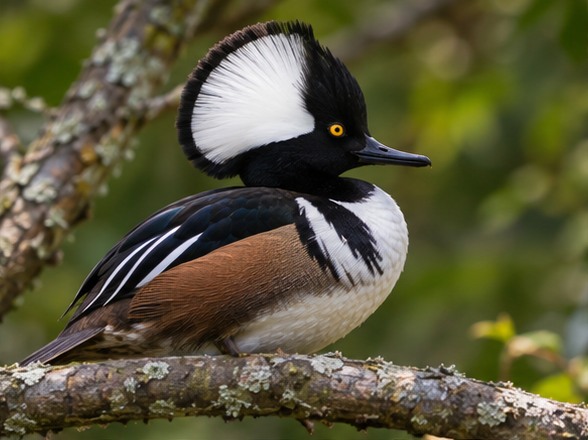
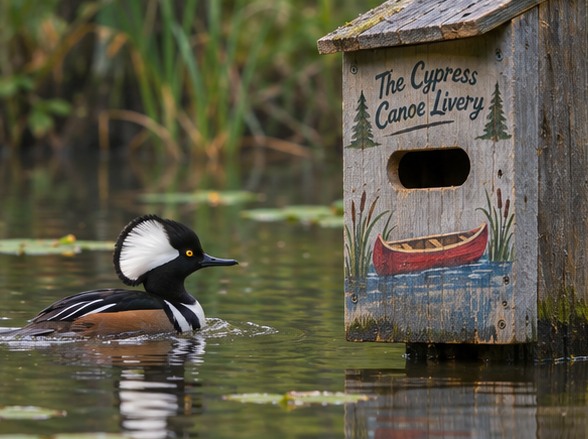
A displaying male fans a white crest edged in black. A female has a softer cinnamon crest and the same narrow bill. This cavity-nesting duck uses a roomy chamber near freshwater. A broad oval entrance and a climbable interior let young birds reach the opening.
Scale is the first thing to consider when choosing this house. A large cavity takes up more space and puts more weight on its support than a small garden nesting box. Ask the maker about the final dimensions, the entry shape and access for seasonal care. Those decisions have a direct bearing on where the house can be installed and whether the person who tends it can reach it safely.
The Landscape
Range and Nesting Habitat
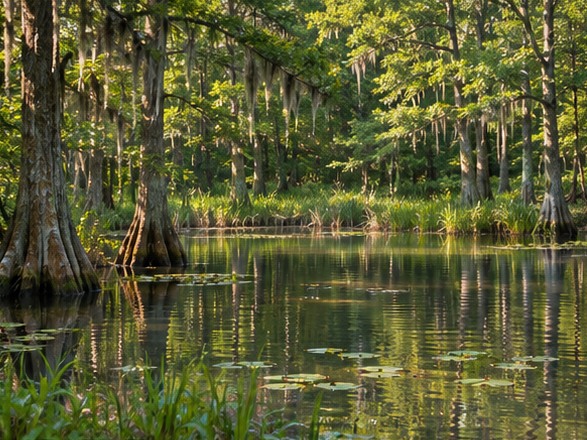
Where might you see the Hooded Merganser? In wooded freshwater landscapes in parts of eastern and western North America during breeding. Quiet wooded ponds and backwaters provide cover. Plan for seasonal water levels, a predator guard and safe maintenance access when considering a mounting site.
Read the range map at two scales. First check whether your part of the country supports breeding birds. Then look at the few hundred yards around the proposed location. Local vegetation, water, elevation and neighboring land can change the answer even within one ZIP code. The linked species account is a starting point for comparing your yard with places where the bird actually nests.
The Handmade Detail
Which Waterway Goes on the Sign?
Name the pond where you first learned to paddle, or use a short boat name from a favorite trip. The canoe’s hull makes a natural panel for the lettering. Send the exact spelling, particularly for a local waterway.
For a gift, a short note explaining why you chose The Cypress Canoe Livery can be as meaningful as the house itself. Include the place, person or small memory that makes the design familiar. If you have a particular painted detail in mind, share it with the maker before ordering and ask how it will read at the finished size. Reclaimed boards have individual markings; the illustration shows the design direction, while the real piece will carry the grain of the timber selected for it.
Field Notes
Watching the House Through the Season
Watch from the bank for a low-sitting duck that dives near overhanging branches. The shape of the crest changes as the bird becomes alert.
Choose a seat from which you can see the entrance without standing in front of it. A few quiet minutes in the morning and another look toward evening can reveal different parts of the bird’s routine. If an adult waits with food or calls repeatedly while you are nearby, move farther away and let it resume its visits. For The Cypress Canoe Livery, plan for an unobstructed view from a comfortable distance and leave the entrance quiet whenever birds are using it. Use the linked NestWatch guide to plan checks appropriate to the Hooded Merganser.