
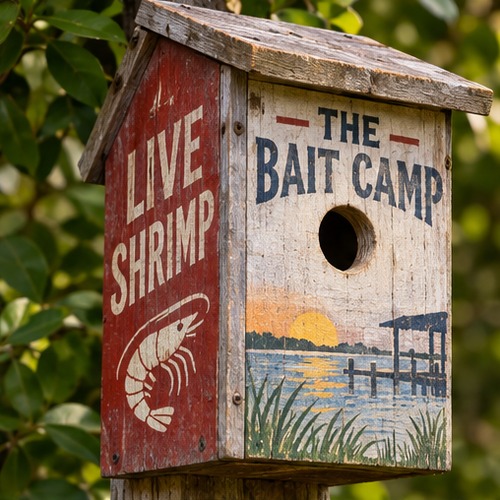
Great Crested Flycatcher · Reclaimed Wood
The Bait Camp
A tall bait shack leaves room for painted lettering down one side.
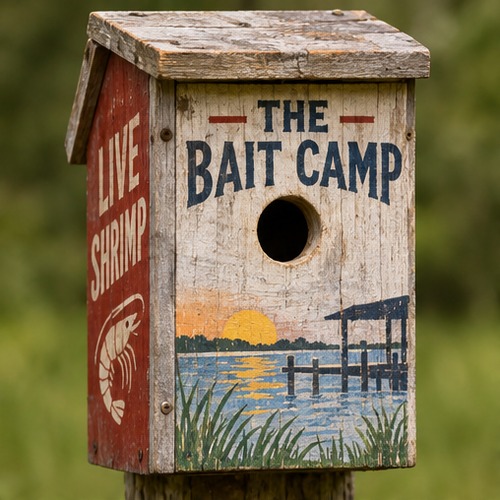
The Birdhouse
Live Shrimp at the Bait Camp
A tall bait shack leaves room for painted lettering down one side. LIVE SHRIMP is the sort of sign you could recognize from a moving boat; a favorite fishing spot across the front turns a familiar Gulf Coast shape into one particular family’s camp.
Imagine seeing it first from a kitchen window, then from a few steps away. At the window it is the outline you notice. Up close, the painted detail catches the eye and the grain shows why the same pattern can look a little different on each piece of reclaimed wood. Both views are part of the character of a handmade house. Underneath that familiar outline, the form is a cavity nest box intended for the Great Crested Flycatcher.
The Intended Bird
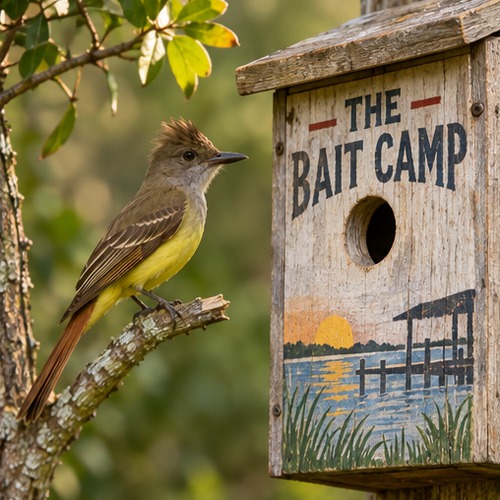
Meet the Great Crested Flycatcher
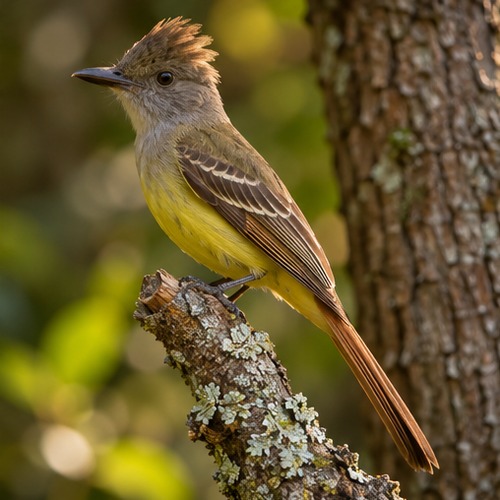
Look high in the canopy for a large flycatcher with a gray throat, yellow belly and reddish flashes in the wings or tail. Its rising, emphatic call can give it away before its colors do. Unlike many flycatchers, this species nests inside a cavity. A tall enclosed chamber fits that habit, with a clear entry for an adult returning from a hunting flight among the branches.
An adult needs to enter with nest material, turn inside and leave again with a clear flight path. That sequence explains the simple face of this design. The paint gives people something to recognize from a distance while the actual chamber gives the bird a sheltered space. When choosing a site, picture the journey from a nearby perch all the way to the opening, including the last few feet.
The Landscape
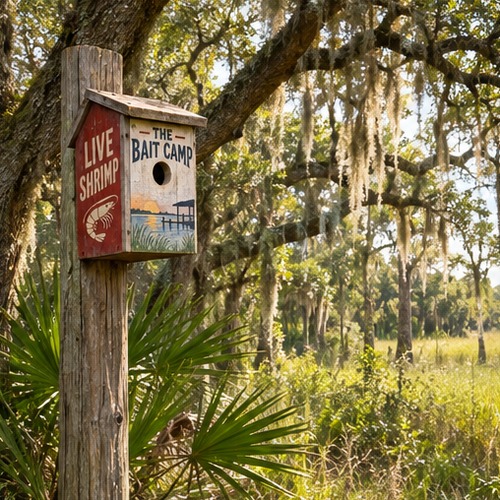
Range and Nesting Habitat
Where might you see the Great Crested Flycatcher? Throughout much of eastern North America in summer, traveling to Mexico, Central America and northern South America outside the breeding season. Look for mature trees around an orchard, woodlot or woodland clearing. A perch with room around it gives the bird a place to launch after flying insects.
The useful question is where this bird spends its nesting season. A dot on a year-round sightings map could represent a migrant stopping for a day. Compare the breeding range with summer observations from a nearby park or natural area. Then walk your own grounds and look for the same pattern of food, cover and open approach before selecting the final spot.

The Handmade Detail
Which fishing spot goes on the shack?
Choose the bay, cut, creek or landing that means something to the angler. Think about the angle from which the house will be viewed so the side sign and front name can both be seen.
When discussing The Bait Camp with the workshop, describe the part of the design that first caught your eye. A quick sketch or a reference photograph can say more than a long list of changes. Think about how the piece will look in summer leaves as well as against bare branches. The grain of reclaimed wood varies from board to board, so a painted line can pick up a different texture on the finished house. Keep the entrance, the roof edge and access for seasonal care clear of any requested embellishment.
Field Notes
Watching the House Through the Season
Start with your ears and track the call from one treetop to the next. Brief flights out from a high branch and back again reveal how much space the bird uses beyond its nesting cavity.
Choose a seat from which you can see the entrance without standing in front of it. A few quiet minutes in the morning and another look toward evening can reveal different parts of the bird’s routine. If an adult waits with food or calls repeatedly while you are nearby, move farther away and let it resume its visits. For The Bait Camp, plan for an unobstructed view from a comfortable distance and leave the entrance quiet whenever birds are using it. Use the linked NestWatch guide to plan checks appropriate to the Great Crested Flycatcher.