
Carolina Chickadee · Reclaimed Wood
Main Street Barber
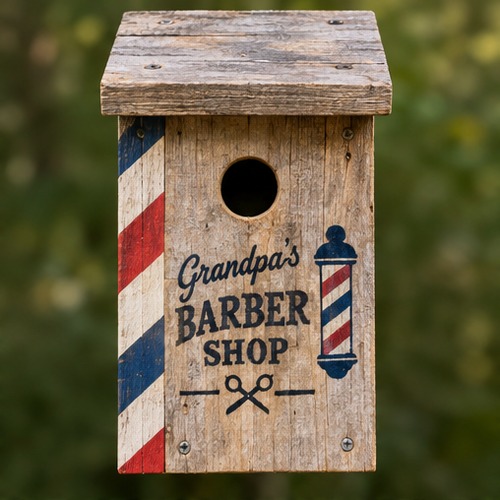
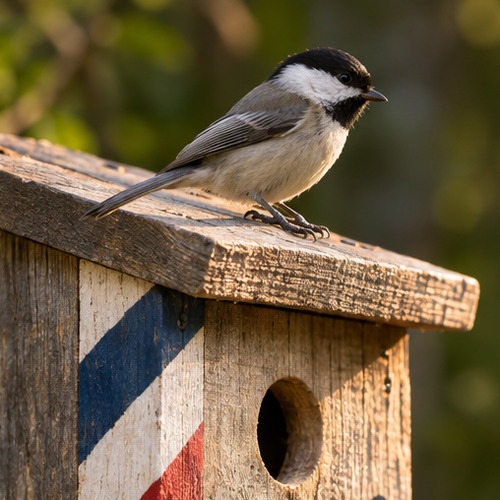
Red, white and blue bands run down one corner like the stripe outside a neighborhood barbershop.
The Birdhouse
The Barber Stripe
Red, white and blue bands run down one corner like the stripe outside a neighborhood barbershop. A name on the shop sign completes the story. Bold diagonals remain recognizable after the smaller letters disappear into the leaves behind the house.
Imagine seeing it first from a kitchen window, then from a few steps away. At the window it is the outline you notice. Up close, the painted detail catches the eye and the grain shows why the same pattern can look a little different on each piece of reclaimed wood. Both views are part of the character of a handmade house. Underneath that familiar outline, the form is a cavity nest box intended for the Carolina Chickadee.
The Intended Bird
Meet the Carolina Chickadee
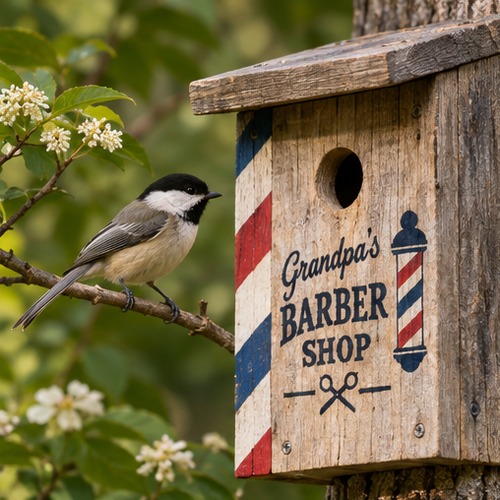
Look for a small black-capped bird with white cheeks and a dark bib inspecting the ends of leafy twigs. Its quick movements and voice are often easier to pick up than subtle plumage differences. A compact cavity suits a small woodland bird that carries moss and soft lining into the nest. An unobstructed entrance matters more to the bird than the lettering or artwork outside.
An adult needs to enter with nest material, turn inside and leave again with a clear flight path. That sequence explains the simple face of this design. The paint gives people something to recognize from a distance while the actual chamber gives the bird a sheltered space. When choosing a site, picture the journey from a nearby perch all the way to the opening, including the last few feet.
The Landscape
Range and Nesting Habitat
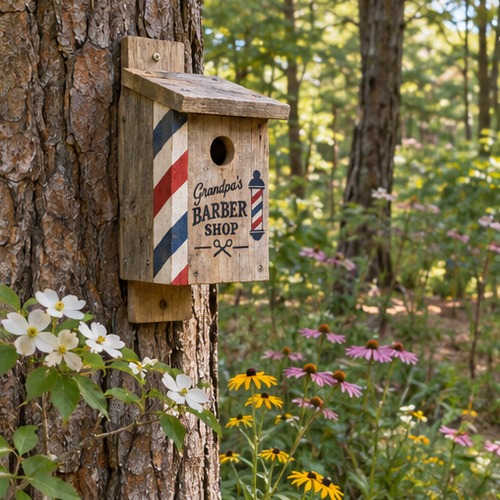
Where might you see the Carolina Chickadee? Primarily the southeastern United States, extending west into parts of Texas and north to a shifting contact zone with the Black-capped Chickadee. Favor a yard with mature deciduous trees or a woodland edge. An exposed fence in the middle of an open lawn offers little of the leafy foraging space chickadees use.
The useful question is where this bird spends its nesting season. A dot on a year-round sightings map could represent a migrant stopping for a day. Compare the breeding range with summer observations from a nearby park or natural area. Then walk your own grounds and look for the same pattern of food, cover and open approach before selecting the final spot.

The Handmade Detail
Whose name goes above the shop?
Choose the name that customers or family actually used for the barber. A grandfather’s nickname may feel more like the old shop than the formal name printed on a certificate.
When discussing Main Street Barber with the workshop, describe the part of the design that first caught your eye. A quick sketch or a reference photograph can say more than a long list of changes. Think about how the piece will look in summer leaves as well as against bare branches. The grain of reclaimed wood varies from board to board, so a painted line can pick up a different texture on the finished house. Keep the entrance, the roof edge and access for seasonal care clear of any requested embellishment.
Field Notes
Watching the House Through the Season
Listen for chickadee calls and watch a flock work from tree to tree. In areas where both chickadees meet, use range, voice and local records together before naming a distant visitor.
A notebook can be as useful as a camera. Sketch the route from a favorite perch, record whether one bird or two appeared, and note the first day you saw nesting material. These details are easy to miss when trying to fill the frame. Compare the notes later with the nesting calendar for your own area. For Main Street Barber, plan for an unobstructed view from a comfortable distance and leave the entrance quiet whenever birds are using it. Use the linked NestWatch guide to plan checks appropriate to the Carolina Chickadee.