

Black-crested Titmouse · Reclaimed Wood
Eight-Bit Arcade
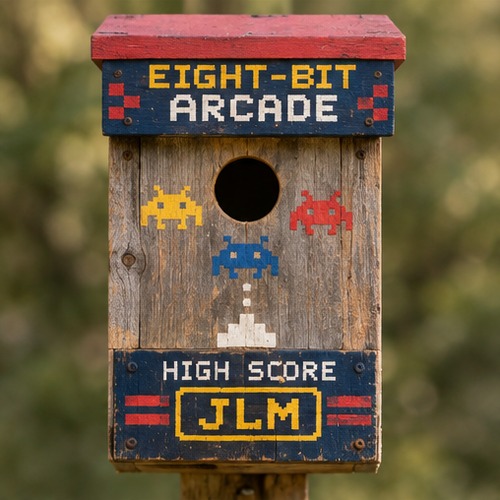
A flat marquee and squared-off lettering recall a neighborhood arcade cabinet.
The Birdhouse
A Place on the High-Score Board
A flat marquee and squared-off lettering recall a neighborhood arcade cabinet. The HIGH SCORE panel leaves room for exactly the kind of three-letter boast that used to survive until the machine was switched off. A small number of painted blocks supplies the whole visual joke.
Stand back until the smaller lettering disappears. The outline and the broad blocks of color still tell you what you are looking at. Move closer and the brushwork and grain become visible. Reclaimed boards bring their own small variations in tone, so two versions of the same design can have a different surface under the paint. Underneath that familiar outline, the form is a cavity nest box intended for the Black-crested Titmouse.
The Intended Bird
Meet the Black-crested Titmouse
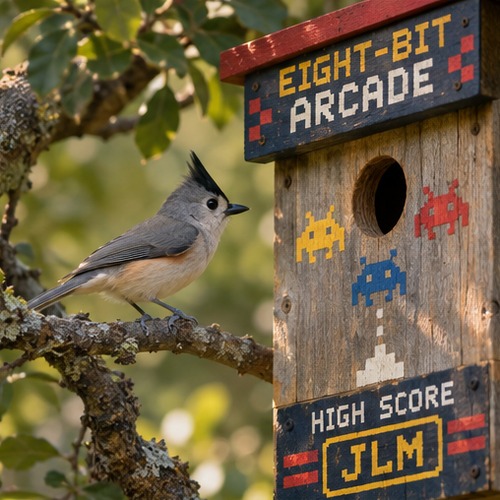
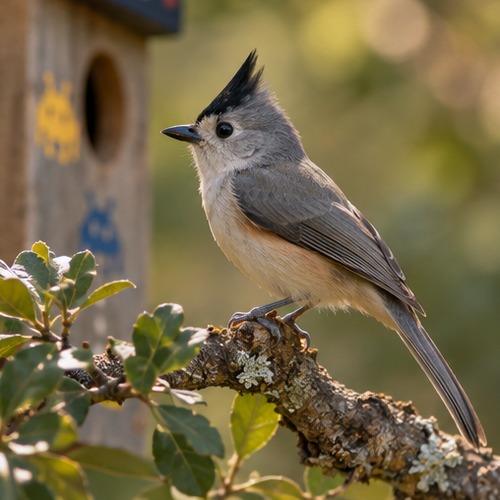
Look for a black crest above a light forehead, a gray back and pale underparts. The bird moves through oak and mesquite branches with the curiosity and agility typical of titmice. An enclosed chamber matches the species’ use of existing cavities. An arcade marquee can carry initials above the entry while the cavity itself stays free of decoration.
An adult needs to enter with nest material, turn inside and leave again with a clear flight path. That sequence explains the simple face of this design. The paint gives people something to recognize from a distance while the actual chamber gives the bird a sheltered space. When choosing a site, picture the journey from a nearby perch all the way to the opening, including the last few feet.
The Landscape
Range and Nesting Habitat
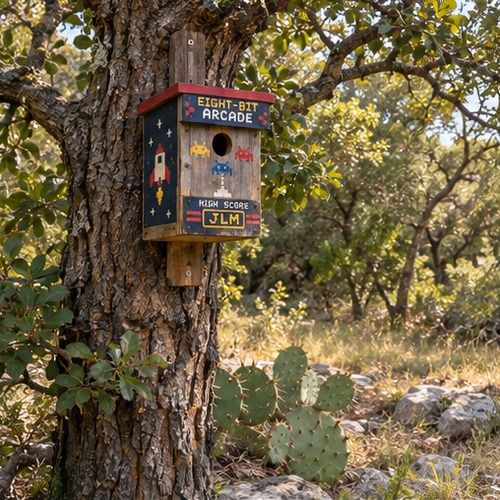
Where might you see the Black-crested Titmouse? Chiefly in Texas, southwestern Oklahoma and northeastern Mexico. The overlap with Tufted Titmice in parts of Texas makes local identification especially interesting. Look for wooded edges and oak or mesquite country within the bird’s range. Check local sightings for the breeding season, especially where two titmouse species meet and hybrids occur.
Check a breeding-season map before choosing a mounting point. A bird seen on a winter walk or during migration may spend the nesting months hundreds of miles away. Look at recent local observations from late spring or summer and compare the habitat around those sightings with your own property. The match becomes more convincing when both the season and the landscape line up.

The Handmade Detail
Whose initials top the leaderboard?
Pick three initials in the order the player would actually enter them. An old nickname or a sibling’s unbeatable score can be a better starting point than the initials on a formal gift tag.
Before settling on the final look of Eight-Bit Arcade, try writing the most important detail on a piece of paper at roughly the size you expect to see. Step back to the distance of your garden chair. Notice what you can still read and which colors disappear against the background. A photograph of the proposed spot helps when discussing the piece with the maker. Allow for differences in the reclaimed boards, especially where a dark grain line crosses a light painted area.
Field Notes
Watching the House Through the Season
A side view in good light shows the crest much more clearly than a silhouette. Listen for repeated whistles, then follow movement along branches near the canopy edge.
A notebook can be as useful as a camera. Sketch the route from a favorite perch, record whether one bird or two appeared, and note the first day you saw nesting material. These details are easy to miss when trying to fill the frame. Compare the notes later with the nesting calendar for your own area. For Eight-Bit Arcade, plan for an unobstructed view from a comfortable distance and leave the entrance quiet whenever birds are using it. Use the linked NestWatch guide to plan checks appropriate to the Black-crested Titmouse.